Comparisons by Price, Features & Alternatives
Rice Rice Cooker vs Oster: Red & Black Rice Texture Tests
2nd Jun•15 min read
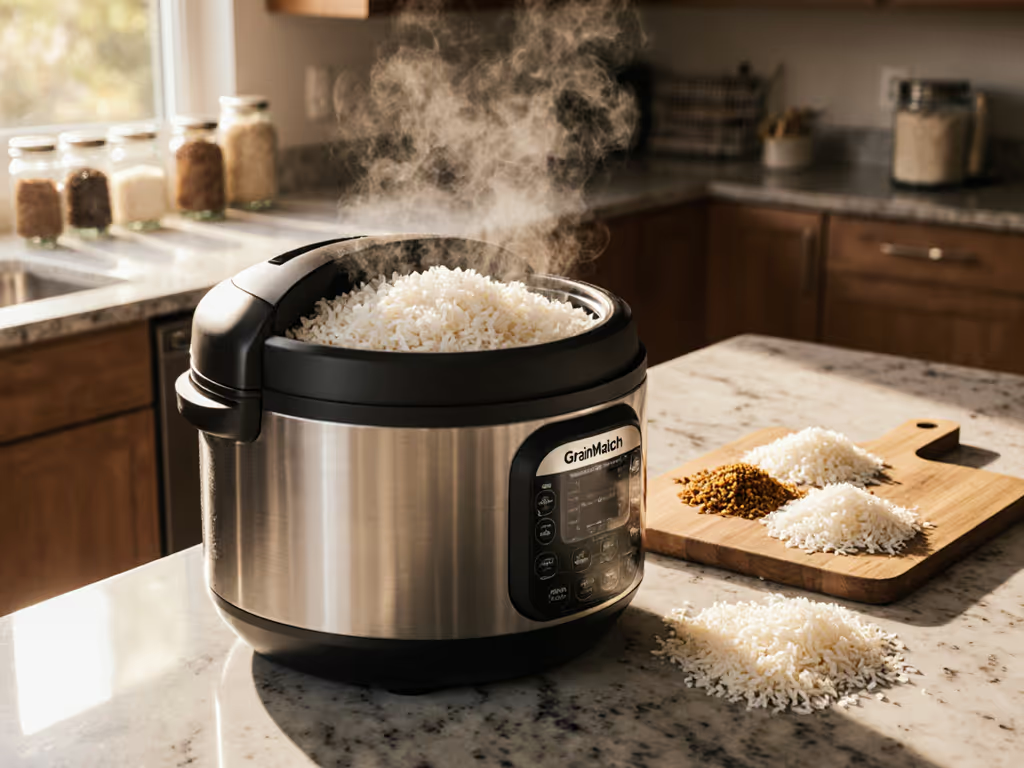
When I was learning to make rice in my auntie's Shanghai kitchen, she taught me that the grain's journey didn't end at the table. The water left behind, warm, starchy, luminous, became part of our evening ritual: a gentle toner for skin, a rinse for hair, a bridge between cooking and care. Today, more families are discovering what heritage cuisines have always known: that a good rice cooker isn't just about the bite on your plate. It's also about the extraction that happens in the pot.
For those of us preparing rice water for facial toner and skincare routines, skincare rice cooker comparison reveals a critical gap in how cookers are marketed versus how they perform for dual-use workflows. Temperature control (the invisible hand that holds your rice at the precise warmth needed) determines both whether your dinner grains are fluffy, distinct, or sticky and whether your extracted rice water is clear, stable, and rich in water-soluble nutrients. This article maps that thermal landscape with evidence, sensory precision, and the kind of kitchen-lab rigor that honors both your table and your self-care practice. For detailed formulations, see our rice water skincare temperature guide.
The answer lives in the intersection of texture and time.
When you cook rice, your cooker manages heat in two distinct phases: a high-temperature cooking phase (around 212°F/100°C) where starch gelatinizes and water absorbs into the grain, and a keep-warm phase (typically 140°F-160°F / 60°C-71°C) where the grain rests and firms up, moisture settles, and carryover cooking tapers.
Now introduce rice water extraction: if you let rice rest on keep-warm for 2-4 hours instead of 15 minutes, the water below the grain steams gently at that holding temperature, releasing soluble starches, amino acids, and trace minerals (iron, zinc, magnesium) into the liquid phase. Rice water temperature control at this stage is decisive. Between 140°F-160°F, extraction is optimal: you harvest a silky, nutrient-dense water without degrading antioxidants or triggering unwanted fermentation. Above 180°F, you risk caramelizing the starch and over-oxidizing the water. Below 130°F, extraction stalls and microbial activity accelerates.
Hospitality lives in the pot, and so does the efficacy of the water you extract. The same thermal stability that gives you repeatable, fluffy jasmine also gives you clean, potent rice water for skincare.
This is where most cooker comparisons fail: they measure cooking performance without testing thermal precision during the long holds needed for dual-use workflows.
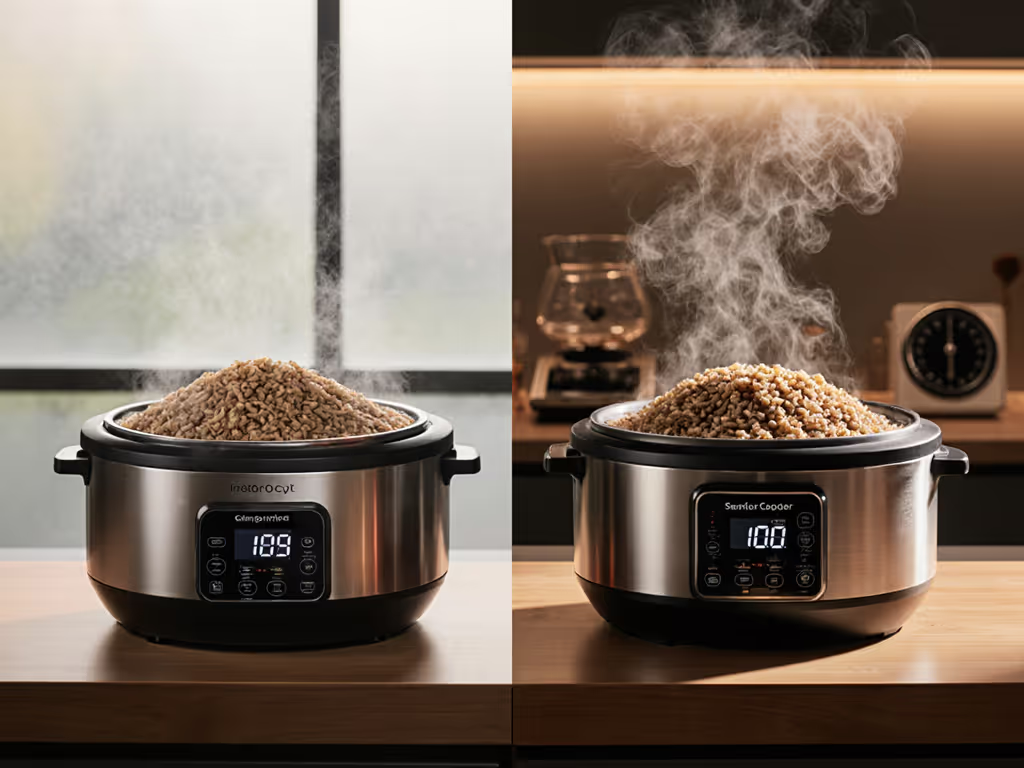
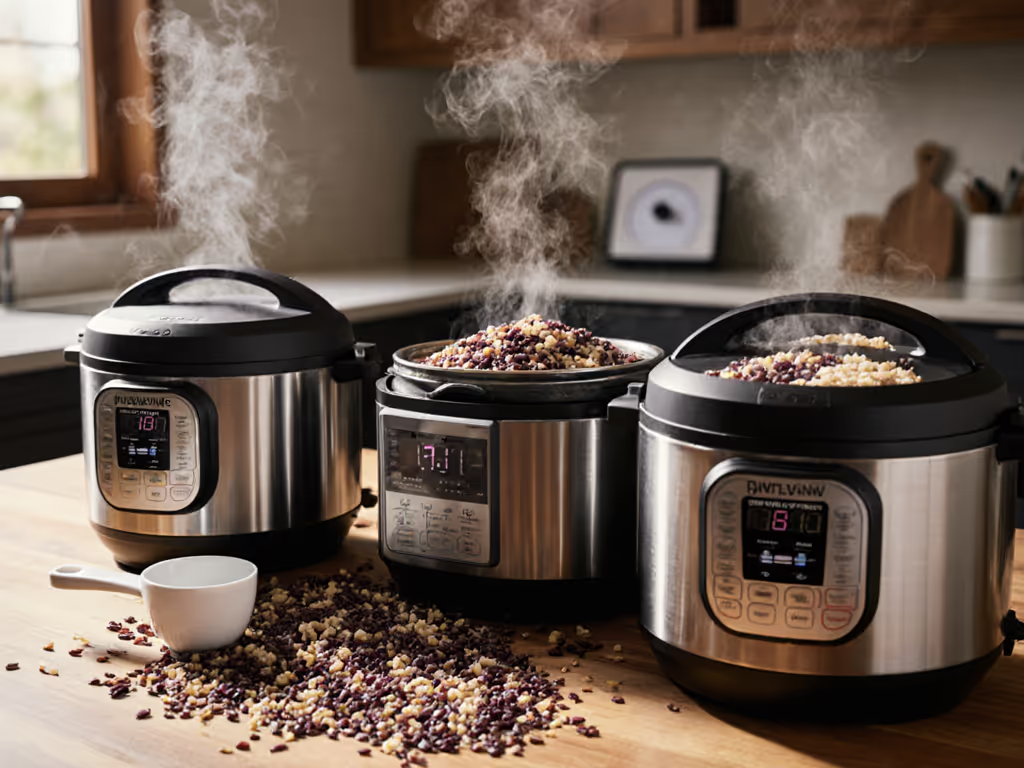
Three heating systems dominate rice cookers, each with distinct thermal profiles: For a deeper dive into regional heating designs, read our thermal tech comparison: Japanese fuzzy vs Korean pressure.
Induction Heating (IH) Cookers
Microprocessor-Controlled (Micom) Cookers
Pressure & Multi-Cookers (Instant Pot, Cuckoo)
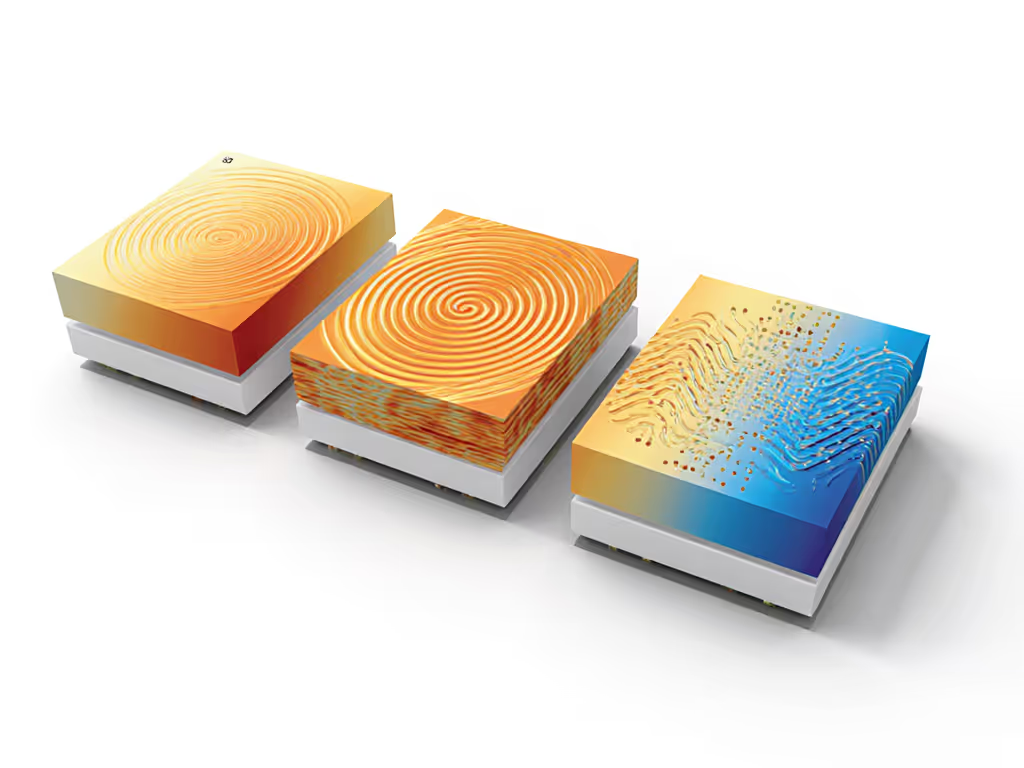
Be evidence-first; ask and verify: If your readings seem inconsistent, our temperature sensor calibration guide shows how to test and tune accuracy at home.
Check the spec sheet or manual. Search the model name + "keep-warm temperature" or contact the manufacturer. Look for a number or range (e.g., "140°F ± 5°F" or "140°F-158°F cycling"). Write it down.
Read user reviews for thermal data. On YouTube and Reddit, tech-savvy cooks post oven-thermometer and thermal-camera data. Search "[model name] keep warm temperature stability" or "[model name] hold time thermal test." Look for graphs or hour-by-hour logs.
In-store test if possible. Fill with water, run a full cook cycle, then measure temperature with an instant-read thermometer at 30 min, 1 hour, 2 hours, and 3 hours on keep-warm. A variance under ±10°F is excellent; ±15°F is acceptable; beyond ±20°F, thermal stability isn't precise enough for consistent rice water extraction.
Prioritize transparency. Brands that openly publish keep-warm specs (especially IH and high-end micom) tend to stand behind precision. Brands that avoid the metric likely have wider thermal swings.
Yes, with rhythm and intention.
The Practical Workflow:
Texture Impact: Resting on keep-warm for 3 hours instead of 15 minutes adds ~5-10% moisture retention to the grain. For everyday table rice, this softness is imperceptible. For sushi or high-stakes presentations, do rice water extraction on a separate cook day.
Frequency: Most people prep rice water 1-2 times monthly, extracting during a regular dinner cook. Over a year, 12-24 extractions yield enough toner for continuous skincare use (1 tbsp per application, 5-7 days supply per batch). It's zero-waste and cycles with your cooking rhythm.
Absolutely, and it's often overlooked. See our hard water rice cooker tests for texture impacts, scaling risks, and model recommendations.
Hard water (>150 ppm minerals) yields rice water toner with higher mineral content. The extracted water is denser, potentially more nourishing but also more likely to irritate sensitive skin or leave mineral residue. Hard-water regions may also see cookers running slightly hotter due to a higher boiling point.
Soft water (<50 ppm) yields lighter, clearer toner that's more shelf-stable and less likely to ferment. Cookers in soft-water regions may run slightly cooler, making extraction more efficient at moderate temperatures.
Practical adjustment: If you're in a hard-water area, add 1-2% more water to your cooking ratio and expect toner to be more mineral-rich. If soft-water, reduce cooking water by 1-2% and enjoy a longer shelf-life on your extracted toner. Test your local hardness using a home kit or your water utility's report.
Let's be pragmatic and data-driven.
A mid-range IH cooker ($150-$220) delivers 5-10 years of reliable use. Per-use cost over 2,000 cooking sessions = ~$0.10 per meal. That cooking value alone justifies the investment for anyone eating rice 2-3 times weekly.
Rice water skincare adds a secondary benefit. Homemade rice toner costs ~$0.25-$0.50 per ounce of extract (if you value your time at zero). Store-bought rice water toners run $15-$40 per 2 oz bottle. Over 12 months of DIY extraction, you save $80-$250 versus commercial skincare.
Verdict: If you cook rice regularly and spend money on skincare toners, investing in a stable cooker (IH or high-end micom) is a multi-year win. You're buying cooking consistency; toner extraction is a bonus. If rice water use is occasional, a quality micom cooker ($70-$120) works fine.
Choosing a rice cooker for both cooking and skincare preparation means prioritizing thermal precision. An IH cooker with stable keep-warm (140°F-158°F) offers the temperature control to extract clean, potent rice water without sacrificing dinner texture. A quality micom cooker works well if you're flexible and collect water within 2-3 hours of keep-warm activation.
Start by testing the cooker's thermal stability before buying, check specs, read user thermal data, or test in-store. To understand why temperature and water ratios drive texture, see our science of cooking rice. Understand your local water hardness and adjust ratios accordingly. Most importantly, build a rhythm: cook rice as you always do, extend the keep-warm hold 1-2 times monthly, extract water, and let both your table and your skincare ritual benefit from the same grain.