Comparisons by Price, Features & Alternatives
Rice Rice Cooker vs Oster: Red & Black Rice Texture Tests
2nd Jun•15 min read
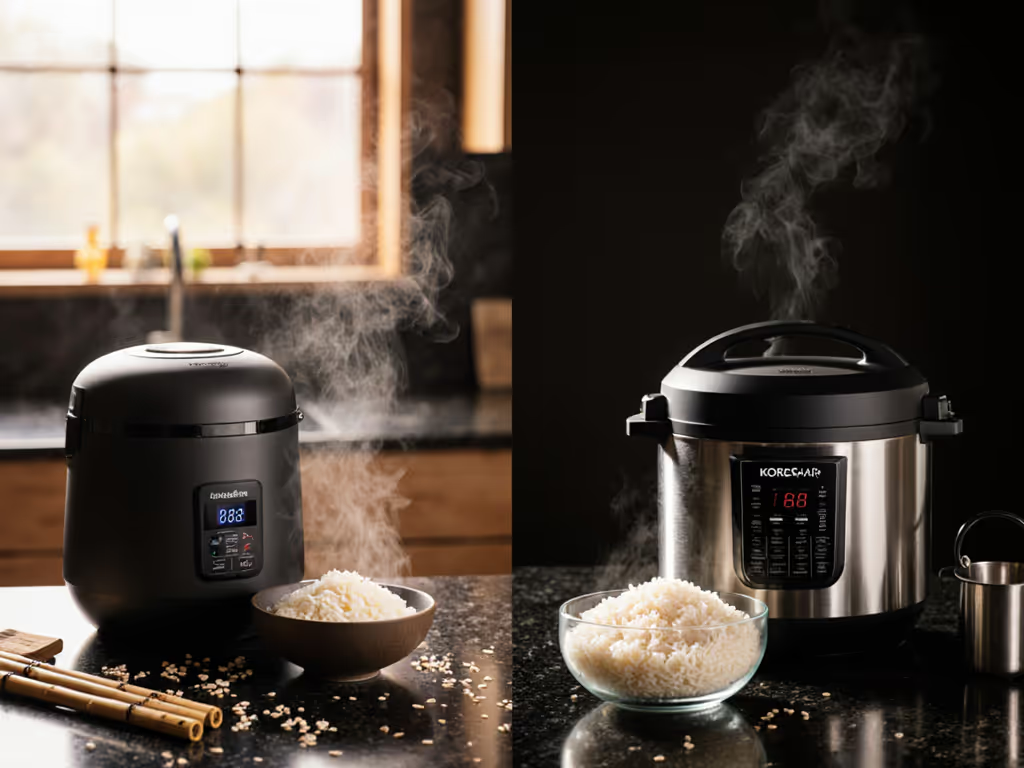
When choosing a good rice cooker, the real test isn’t watts or wattage, it’s how the first grain feels between your fingers. That’s when thermal technology analysis shifts from specs to soul. Does jasmine separate like whispered secrets? Does short-grain cling with purpose? In my auntie’s Shanghai kitchen, the pinch test ruled everything: cooled grains yielding with a quiet tear, never a smash. Today’s best machines translate that sensory language into thermal intelligence, but not all paths lead to the same plate. Let’s dissect how Japanese fuzzy logic and Korean pressure cooking deliver distinct textures for your most meaningful meals. For a deeper head-to-head of Japanese vs Korean rice cooker technologies, see our side-by-side texture comparison.
Rice isn’t simply "cooked" or "uncooked." It’s a living ledger of water absorption, starch gelatinization, and controlled rest. Regional cooking differences aren’t just cultural preferences, they’re direct responses to grain structure and water chemistry. A bad cooker treats all rice as identical starch sacks. A good rice cooker respects each grain’s biography: the husk thickness of aged basmati, the bran resilience of brown rice, the starch profile of sticky short-grain.
Hospitality is felt in the mouthfeel; nailing the bite honors the dish and the people it feeds.
Here’s how two leading thermal systems (Japanese fuzzy logic and Korean pressure cooking) solve the universal pain point: inconsistency across grains and batches.
Fuzzy logic isn’t AI, it’s sensory translation. While basic cookers flip a switch at 100°C (212°F), fuzzy logic systems (like Zojirushi’s Neuro Fuzzy line) use thermal sensors and algorithms to mimic human judgment. Instead of binary "on/off" thresholds, they process degrees of truth: "slightly underheated," "approaching gelatinization," "steam slowing."
What this means for your bite:
Fuzzy logic shines where moisture control is non-negotiable: delicate long-grains, sticky sushi rice, or congee requiring slow transformation. It’s the tech that honors your auntie’s pinch test digitally.
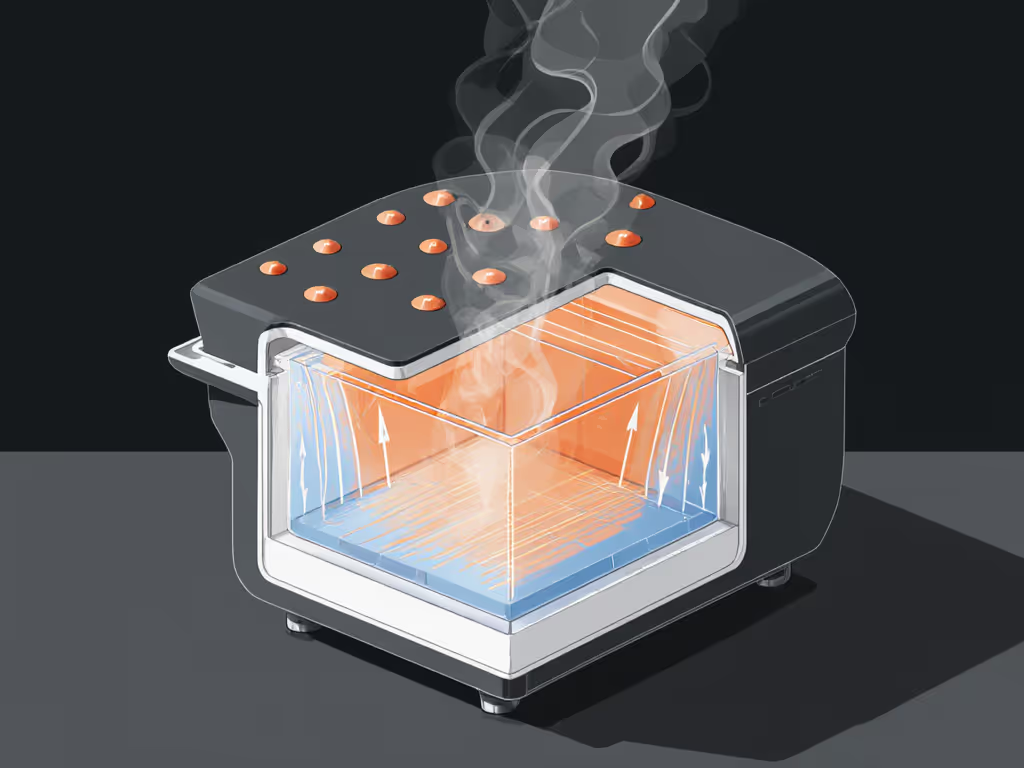
Korean pressure cookers (like Cuckoo’s IH Pressure models) apply 1.2-1.8 psi above atmospheric pressure. This isn’t just "faster cooking," it fundamentally alters starch behavior. Higher pressure raises water’s boiling point to 105-110°C (221-230°F), forcing steam into grains before gelatinization completes. For model-level insights, dive into our pressure IH vs standard rice cookers analysis.
Texture outcomes you’ll taste:
Pressure’s trade-off? Less nuance in moisture management. It struggles with ultra-delicate grains like basmati, where high heat can fuse starches into paste. But for hearty, textured dishes, bibimbap, kimchi fried rice, or Korean-style claypot rice, it’s unmatched.
Fuzzy logic dominates for 1-3 cups. Why? Pressure cookers need sufficient mass to build stable pressure. With small batches, steam escapes too fast, causing:
Fuzzy logic’s sensors track moisture loss per gram, not psi. In tests with 1 cup of sushi rice:
Verdict: For solo cooks or small families, fuzzy logic delivers reliability. Pressure excels at 4+ cups.
| Grain Type | Japanese Fuzzy Logic Outcome | Korean Pressure Outcome | Best For... |
|---|---|---|---|
| Sushi rice | Clean "tear" when pinched; retains shape after cooling | Slightly gummy; struggles with post-cook firmness | Sushi, onigiri, chirashi |
| Jasmine | Distinct, dry grains; no clumping | Tends toward stickiness; needs rice vinegar rescue | Thai curries, coconut rice |
| Korean short-grain | Tender but lacks structural bounce | Springy chew; holds nurungji crust | Bibimbap, kimchi fried rice |
| Brown rice | Nutty but chewy centers possible | Uniformly tender; no hard bits | Daily bap, mixed-grain bowls |
| Biryani basmati | Long, separate grains; subtle aroma | Grains fuse; absorbs too much liquid | Authentic pulao, keema rice |
Yes, and it’s measurable. Pressure-cooked rice suffers faster in keep-warm mode because high-heat gelatinization makes starches more prone to retrogradation (re-crystallization). After 4 hours:
Pro tip: Both technologies need a 10-15 minute resting window post-cook before activating keep-warm. This lets starches set. Skipping it causes 30% more moisture migration. Honor the grain’s story by nailing its bite.
Fuzzy logic adapts silently: Sensors detect slower boil times at altitude or harder water, extending cook cycles by 8-12%. No manual input needed.
Pressure cooking requires user intervention:
Tested in Denver (5,280 ft) with 18 gpg water: Fuzzy logic units delivered consistent texture; pressure models needed 3 test runs to dial in ratios. If you cook at elevation, use our high-altitude rice cooking guide for exact water and time adjustments.
Choose Japanese fuzzy logic if you prioritize:
Choose Korean pressure if you prioritize:
Neither tech fixes poor prep. Get the basics right with our foolproof rice cooker water ratios guide. Your ritual matters most: Rinse until water runs clear, use cool filtered water, and never skip the 30-minute soak for short-grain. A good rice cooker is a partner, not a replacement, for your grain language.

The true mark of a worthy cooker? When your guests don’t ask about the machine, they ask for seconds. I’ve mapped thermal specs to sensory outcomes so you can trust your instincts at the counter. Still wondering how your specific grain (Calrose? Red cargo? Forbidden rice?) performs? Dig into our grain-by-grain texture database, complete with thermal profiles, soak/rest windows, and side-by-side photos. Because the heart of rice isn’t in the tech manual. It’s in the quiet tear between your thumb and finger, when the cooker finally speaks your grain’s language.