
Rice Cooker Basics, Care & Safety
Rice Cooker Temperature Sensor: Troubleshooting & Calibration
27th Feb•8 min read
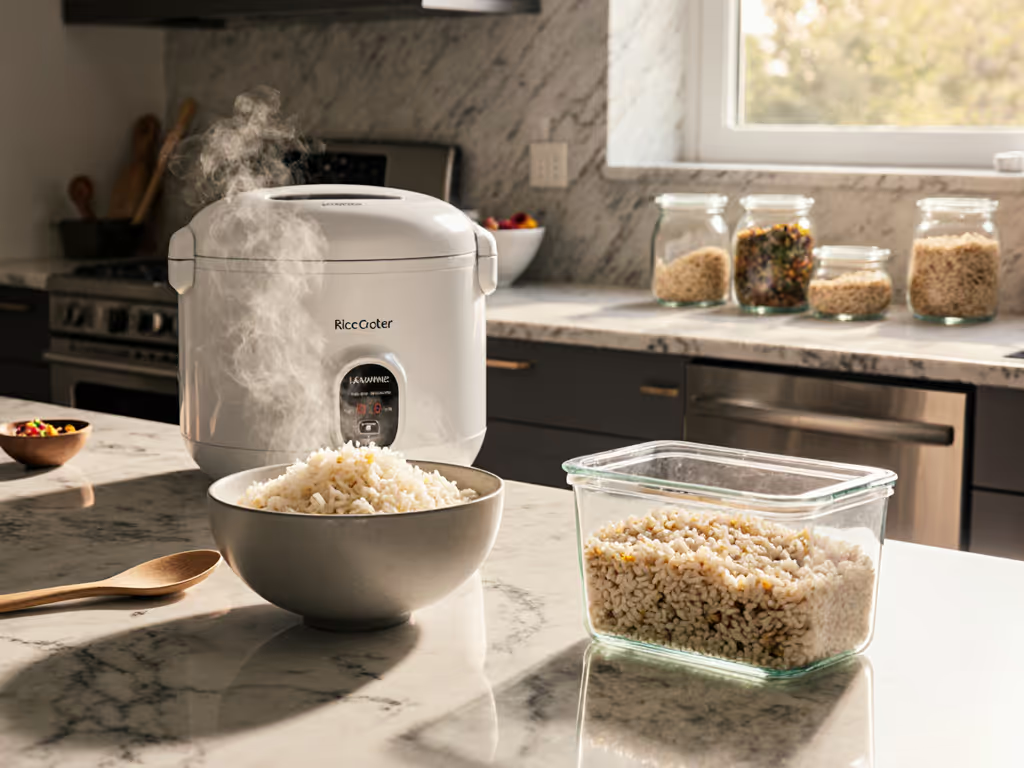
Resistant starch rice transforms ordinary rice into a functional food through one simple step: cooling. When cooked rice is chilled for 24 hours and then reheated, its starch chemistry reconfigures into a form your digestive system cannot fully break down, which paradoxically makes it healthier for blood sugar control, weight management, and gut vitality.[7] This isn't a trend; it's applied food science grounded in how grain structure responds to temperature and time.
The technique honors both heritage wisdom and modern evidence. In my auntie's Shanghai kitchen, I learned to pinch a cooled grain and listen for a quiet tear (that subtle resistance in the bite). Years later, mapping those sensations to precise timings revealed what was always there: the grain's story encoded in its physical structure. When we understand cooling not as mere storage but as an intentional resting window in the grain's lifecycle, we unlock textures that nourish and satisfy. This is how mouthfeel becomes medicine, and how the table conversation relaxes when rice performs as it should.
Resistant starch is a carbohydrate that resists digestion in the small intestine and ferments in the large intestine instead.[4] Unlike regular cooked starch, which breaks down into glucose and spikes blood sugar, resistant starch contributes only 2 calories per gram (compared to regular carbohydrates' 4 calories).[2] More importantly, it feeds beneficial gut bacteria, producing short-chain fatty acids that your colon cells use for energy, bolstering immune function and digestive health.[2]
For rice specifically, this transformation hinges on rice starch retrogradation (the realignment of starch molecules as the grain cools). The amylose and lipid components form structures that hydrolytic enzymes cannot easily penetrate.[1] The result: slower digestion, a lower glycemic response, and sustained energy without the sharp blood-sugar spike that can lead to energy crashes or increased hunger.
The mechanism is elegantly simple. When rice is cooked, heat swells the starch granules, making them easily digestible. Cooling reconfigures those granules. Cooked white rice that is cooled for 24 hours at 4°C (refrigerator temperature) and then reheated (even if warmed back to steaming) retains this resistant starch structure.[7] The chemical bonds do not fully reverse; the grain language remains transformed. For step-by-step techniques to reduce glycemic impact, see our science-backed low glycemic rice guide.
Cooling cooked white rice for 24 hours at refrigerator temperature and then reheating it lowers glycemic response compared to freshly cooked rice.[7]
This resting window is not a passive storage period. It is a phase where grain structure stabilizes into its functional form. The cooling must reach refrigerator depths (around 4°C) to trigger sufficient retrogradation. Room-temperature cooling alone does not achieve the same effect with reliable consistency.
For people managing diabetes or prediabetes, resistant starch rice is a practical ally. Because resistant starches are slowly digested, foods high in resistant starch tend to decrease glycemic and insulin responses after meals.[2] A clinical study found that white rice cooled for 24 hours and reheated significantly lowered glycemic response (125±50.1 vs 152±48.3 mmol.min/L).[7] This means steadier energy, fewer sugar crashes, and less insulin demand (factors that reduce risk for type 2 diabetes and related metabolic disorders).[3]
In the large intestine, gut bacteria ferment resistant starch, producing beneficial compounds that colon cells use for energy.[2] This fermentation boosts the population of good bacteria, reducing constipation, lowering cholesterol levels, and decreasing colon cancer risk.[3] Research also suggests that resistant starch ferments slowly, causing less gas than other fibers (a practical advantage for everyday comfort).[4]
The connection between a healthy gut and mental health is increasingly recognized; supporting your microbiota through resistant starch intake can have cascading benefits for digestion, immunity, and even mood.[2]
Because resistant starch delivers only 2 calories per gram instead of 4, rice dishes made with cooled-and-reheated rice are inherently lower in calories without reducing portion size or satisfaction.[2] Additionally, resistant starch requires more metabolic energy to process (a phenomenon called the "thermic effect of food"), meaning your body burns more calories simply digesting it.[2] The result is prolonged fullness, reduced hunger cues, and less likelihood of overeating.[3]
Emerging evidence suggests that resistant starch may help lower blood cholesterol and triglyceride concentrations, possibly by increasing fat oxidation in the body.[2] This metabolic shift can help prevent fat accumulation in the bloodstream, reducing cardiovascular disease risk (one more reason resistant starch rice fits into a heart-conscious kitchen).
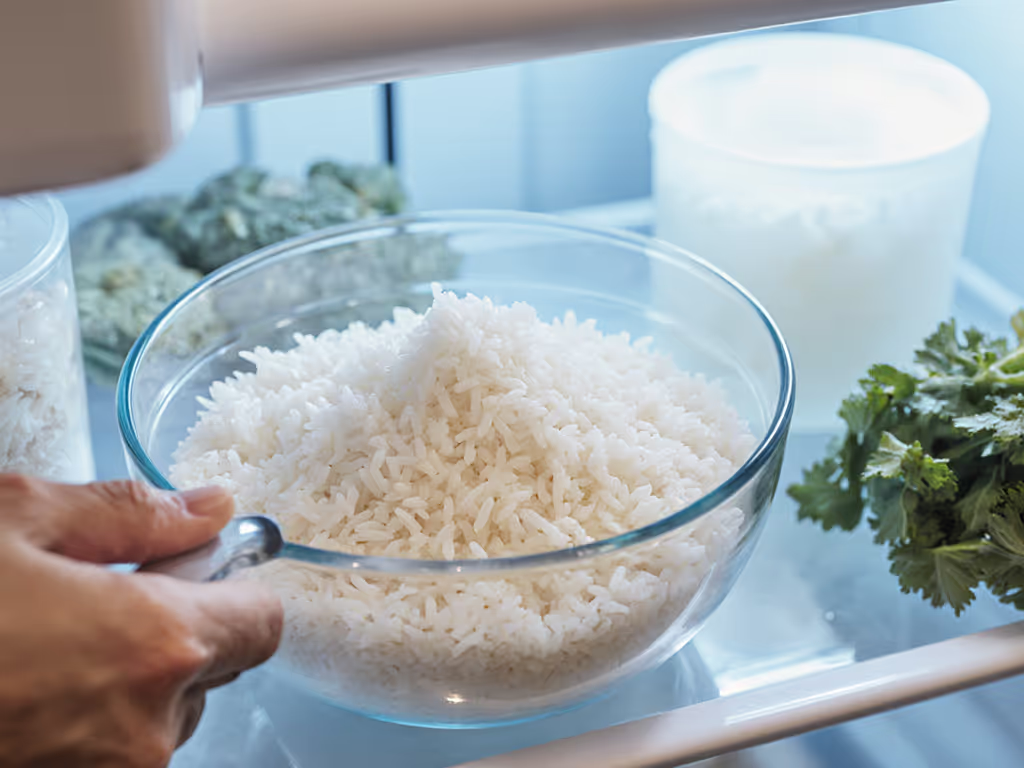
The workflow is straightforward and fits into any household rhythm:
Cook your rice normally. Use your preferred method (cooker, stovetop, or instant pot). Season as usual. No special cooking technique is required; the magic happens in cooling.
Cool immediately after cooking. Spread or transfer the hot rice into a shallow container. Allow it to reach room temperature (approximately 30-60 minutes), then refrigerate at 4°C (standard refrigerator temperature) for a minimum of 24 hours.[7]
Reheat when ready. The rice retains its resistant starch even after reheating. Warm it gently in a microwave, steamer, or pan. Stir occasionally to ensure even heat distribution.
Serve. Use the reheated rice as you would freshly cooked rice (in grain bowls, fried rice, sushi, congee, or biryani). For silky breakfast comfort, try our congee ratios and techniques tailored to different cooker types.
This is the question that separates sustainable practice from laboratory curiosity. Yes, when cooled and reheated properly, rice retains its aroma and flavor profile. The cooling and reheating are transparent to taste; you're not sacrificing palatability. However, as some research acknowledges, high-resistance-starch rice varieties (bred specifically for elevated RS levels) may present slight textural or cooking tradeoffs.[1] For home cooks using standard white, jasmine, or basmati rice through the cooling method, no meaningful flavor loss occurs.
What shifts is the bite itself. The grain feels less tender, more distinct. For fried rice, bibimbap, or crusty claypot dishes, this texture is an asset, as grains hold their shape and deliver that satisfying separation. For congee or risotto, you might compensate with slightly longer simmering if you prefer ultimate tenderness. Honor the grain's story by nailing its bite; if your desired dish calls for maximum separation, cooled rice is your ally.
Daily meals for sustained energy: If blood sugar stability or weight management is a priority, cooled-and-reheated rice becomes your standard preparation.
Fried rice and day-after dishes: The firmer texture of reheated cooled rice is ideal for fried rice, as grains fry rather than break apart. Many cooks already prefer day-old rice for stir-fries; cooling intentionally locks in this advantage.
Meal prep: Batch cooking and cooling rice on Sunday sets up a week of ready-to-heat portions with built-in glycemic benefits. To streamline batching, check our best rice cookers for meal prep picks.
Specific dietary goals: For people managing diabetes, prediabetes, or pursuing weight loss, resistant starch rice is an evidence-backed strategy that doesn't require buying specialty rice or equipment.
Gut health restoration: If recovering from digestive issues or seeking to rebuild a healthy microbiome, resistant starch rice (alongside other fiber sources and probiotics) provides fermentable substrate for beneficial bacteria.
White rice, jasmine, basmati, and sushi rice all develop resistant starch when cooled and reheated.[5] For variety-specific cooking tips on texture and timing, see our rice types mastery guide. The effect is most pronounced in white rice and jasmine, as their lower amylose content at baseline allows the amylose-lipid complex to form more clearly during cooling.[1] Basmati, which is naturally higher in amylose, also responds well but may achieve a slightly higher baseline resistant starch content even when freshly cooked (another reason basmati has historically been recommended for blood sugar management).
Brown rice can form resistant starch too, but the higher bran content and retained moisture mean slightly longer cooling periods may be needed for full retrogradation. The textural difference post-cooling is less pronounced than in white rice, as brown rice's structure is already firmer.
The genius of resistant starch rice is that it requires no new equipment, no specialty rice, no complex technique, only a shift in timing and planning. You cook rice as always, then refrigerate the cooled batch. The next day or later in the week, you reheat and serve. For people already batch-cooking or meal-prepping, this is not additional work; it is a natural extension of existing workflows.
For small households concerned about storage space, portion cooled rice into containers immediately after cooking to maximize fridge real estate. For larger families, dedicate a shelf or section for prepped rice portions, rotating them as you use them.
Resistant starch rice exemplifies how small shifts in when and how we prepare food unlock disproportionate gains in nutrition and texture. The 24-hour resting window is not lost time; it is the grain completing its transformation. When the cooker obeys the science, and the table conversation relaxes because the rice performs as it should, you taste the integrity of technique meeting hospitality.
If you're intrigued by the intersection of food science and heritage practice (how cooling reconfigures grain structure, how mouthfeel shapes satisfaction and health), consider exploring resistant starch rice as a starting point. Experiment with your preferred rice variety, cool a batch intentionally, and compare the texture, satiety, and blood-sugar response to freshly cooked rice. Keep notes on how the grain feels in different dishes: fried rice, grain bowls, sushi, or simple steamed sides. Notice whether energy levels or digestion shifts over weeks of consistent use. This hands-on mapping (from technique to body response) is how you translate food science into lived knowledge.