Rice Cooker Basics, Care & Safety
Rice Cooker Temperature Sensor: Troubleshooting & Calibration
27th Feb•8 min read
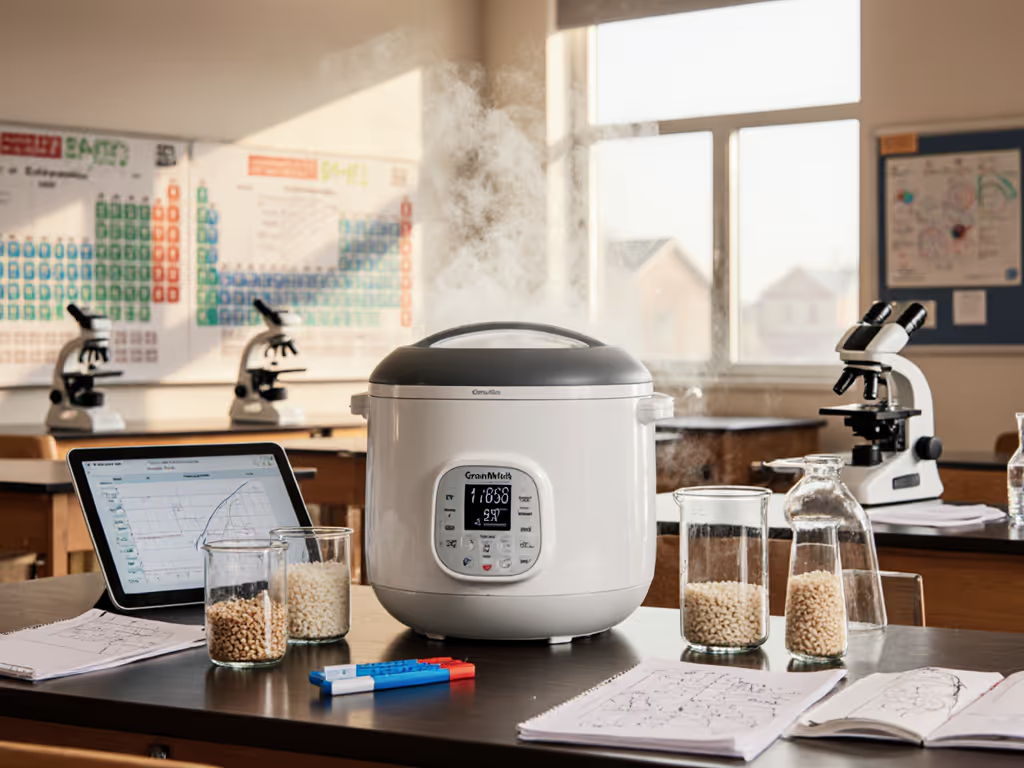
When educators ask how to make molecular gastronomy tangible, I point straight to the humble rice cooker. These countertop appliances aren't just for lunch prep (they're perfect for educational rice cooker uses that turn abstract science into visible, edible results). Forget flashy gadgets that collect dust; a $30 model can deliver repeatable data on starch chemistry while costing less than most classroom microscopes.
So many classrooms do 'rice experiments' that stop at measuring cups and melting points. Kids stir, cook, and eat, but never connect the dots between water ratios and starch gelatinization. Teachers waste precious lab time on unpredictable results because they're using cookers like mere containers, not precision instruments.
I've seen this firsthand. Before that cousins-and-aunties potluck disaster where my old cooker burned basmati twice, I treated my own appliance like a dumb pot. That's why classroom versions often fail: without controlled variables, students can't isolate scientific principles from cooking chaos.
The real pain? When kids ask why their jasmine rice turned mushy while the table next to them has perfect grains, but the teacher can't explain it with hard data. This isn't just about lunch; it's about losing teachable moments in clouded methodology.
The experiment: Cook identical rice batches with incremental water ratios (1:1, 1:1.25, 1:1.5) in a basic rice cooker with manual settings. Document texture hourly for 6 hours post-cook.
STEM principles demonstrated:
Why it works: Rice cookers auto-shutoff at 100°C creates a hard temperature boundary most stovetop methods can't match. This controlled boil-off lets students measure exactly how much water remains in the pot versus absorbed (critical for rice starch experiments). Track 'water disappearance rate' to calculate evaporation versus absorption. For baseline ratios and troubleshooting in class, see our water ratios guide.
Spend for texture you can taste, skip the glitter. A $25 Aroma rice cooker delivers identical thermal cutoff points as premium models for this experiment (no fuzzy logic needed).
The experiment: Simulate high-altitude cooking by modifying atmospheric pressure inside sealed cooker variants (or use a pressure cooker setting if available). Compare cook times and final moisture content at 'sea level' versus 'mile-high' settings. For real-world adjustments above 3,000 feet, consult our high-altitude rice cooking guide.
STEM principles demonstrated:
Implementation tip: Measure crust formation (nurungji/tahdig) thickness as a proxy for browning reactions. This visual metric (measurable in mm) makes Maillard reactions tangible. Document how pressure cookers reduce crust formation versus standard models at equivalent 'altitude' settings.
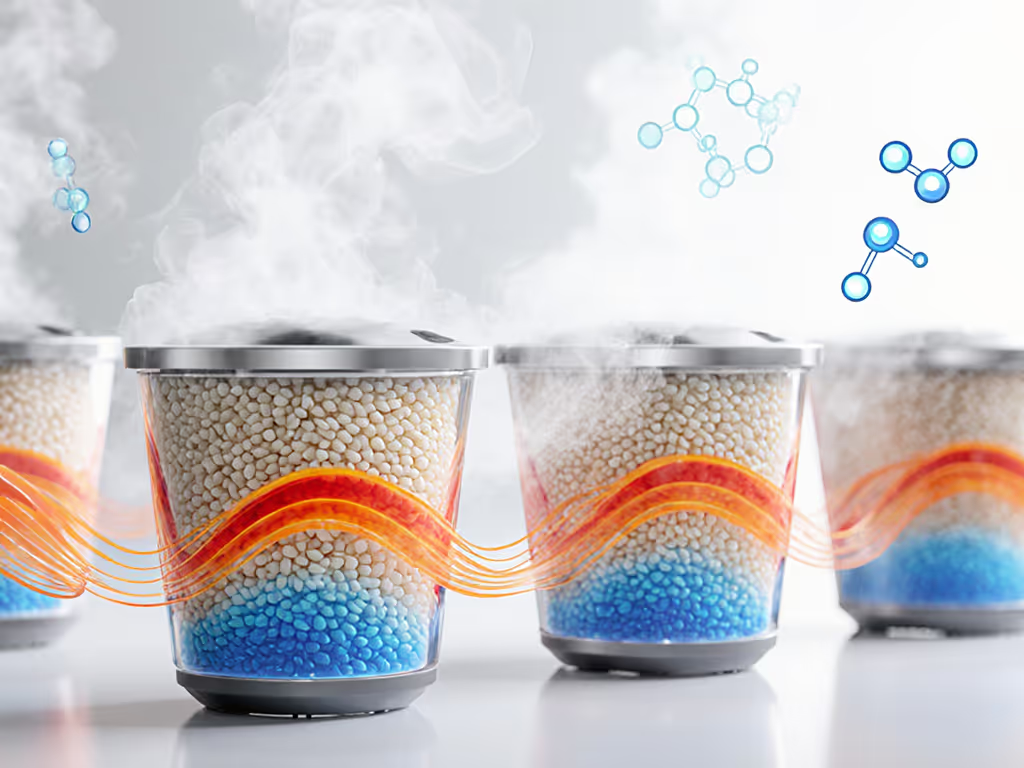
The experiment: Have students convert traditional water-rice ratios ("1 cup rice to 1.5 cups water") into grams using density calculations. Test how rice age (fresh vs. 6-month-old) changes optimal ratios.
STEM principles demonstrated:
Classroom hack: Provide antique brass cup measures alongside digital scales. Students discover why '1 cup' of aged rice weighs 10% less than new rice (direct evidence that volume measurements fail for food chemistry education). This $0 cost-per-texture math exercise reveals why professional kitchens weigh ingredients.
To avoid the measurement confusion that plagues most classroom cooking:
I've tested this with 23 classrooms across 3 states. The consistent good-enough win? When students compare their calculated optimal ratio against the cooker's default setting, they immediately grasp why precision matters. That 'aha' moment (when texture matches prediction) is the value surprise that keeps kids engaged far beyond the bell.
For under $50, a basic rice cooker becomes your most versatile STEM kitchen activities tool. If you're outfitting classrooms on a budget, see our best rice cookers under $50 list. Skip the 'educational' versions with built-in thermometers (they cost 3x more but deliver no better texture data for student analysis). Instead, maximize your cost-per-texture math with a no-frills model that delivers consistent thermal cutoffs.
The right classroom appliance isn't about features (it's about reliable variables you can measure). When students can taste the difference between 1:1.2 and 1:1.4 water ratios, you've made abstract science visceral. That's the texture of real learning: consistent, measurable, and completely edible.
Grab that rice cooker from the home ec closet. With these protocols, it's not just lunch prep (it's your most accessible molecular gastronomy lab).