Rice Cooker Homemade Rice Vinegar: Timing Protocol
By Kenjiro Sato • 16th Dec
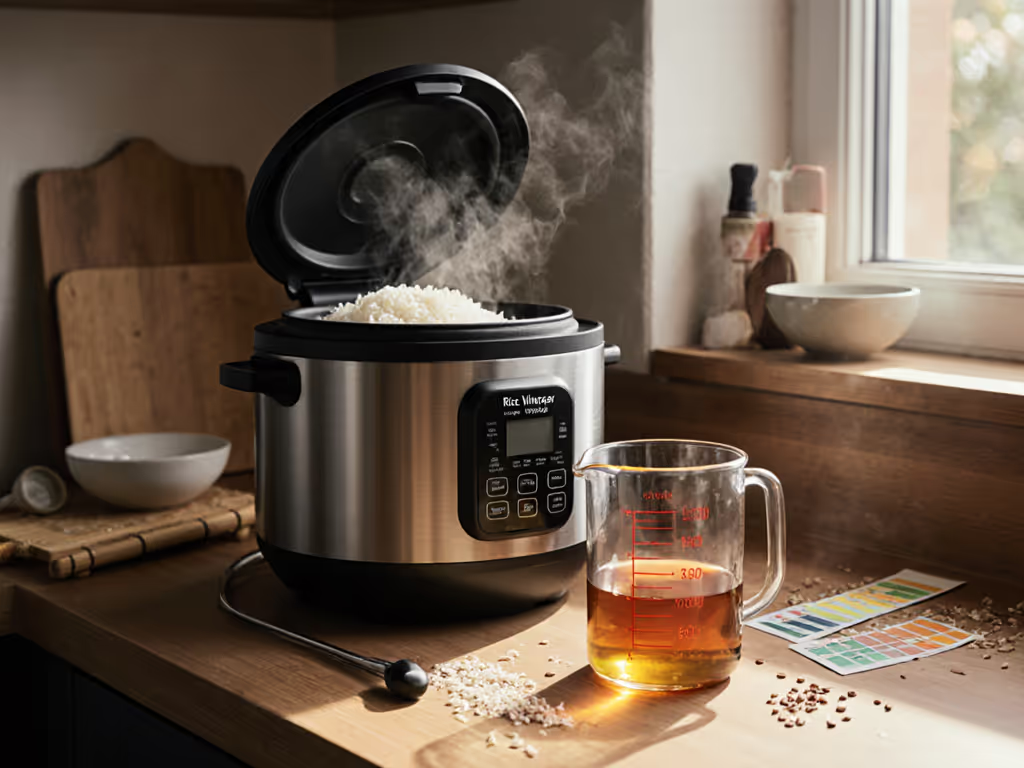
When exploring rice cooker applications beyond basic cooking, precise rice fermentation techniques become critical for consistent results. The distinction between occasional success and reliable production lies in methodical timing control, not equipment prestige. This guide looks at fermentation using measurable signals rather than subjective descriptions. Texture is a measurement, not a mood (let's prove it). For a step-by-step fermentation overview, see our rice cooker sake guide.
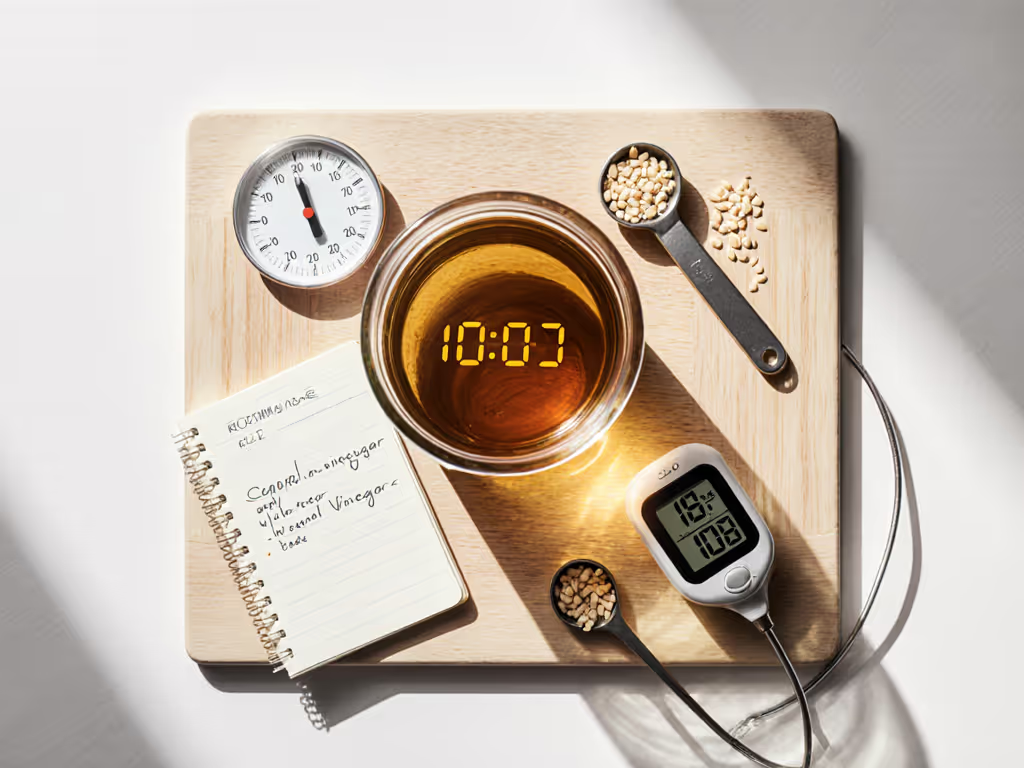
Why can't I just use store-bought rice vinegar?
Commercial products standardize acidity, but traditional vinegar making requires understanding the fermentation continuum. Homemade versions can swing noticeably in tartness if timing drifts, which you can see through the direction of pH and Brix trends. In humid seasons and with varying cooker thermal profiles, even small deviations during saccharification can push final acidity off target. Repeatable results demand tighter control than most assume.
Can a rice cooker actually produce vinegar?
Yes, but only with constrained variables. A rice cooker can hold gentle warmth for the yeast phase, then shift to a cooler, steady range for acetic conversion. Crucially, do not rely on an unmodified "keep warm" setting; many models run hotter over long holds and can stress or inactivate cultures. A practical approach is to use short heating pulses with full power-off rests to stabilize the contents, verifying with an external thermometer. This closely mimics a controlled kōji chamber in spirit, focusing on stability over gadgetry.
What's the exact timing protocol?
My approach uses dual control references (a known commercial vinegar and a baseline pH strip) to compare directionality, not to chase exact values. Think in phases: cook rice into a loose porridge, let it cool from cooking heat to comfortably warm, introduce Aspergillus oryzae to free up sugars, allow yeast to generate alcohol under steady warmth, then support Acetobacter as it converts that alcohol at a cooler, oxygenated hold. Keep everything clean, watch the trend toward increasing acidity, and monitor stability at the grain level. Rice surface starch influences soluble sugar availability, which in turn affects the eventual acidity and texture. If you want the deeper why behind enzyme activity and gelatinization, read the science of cooking rice explainer.
How does cooker temperature control impact texture?
"Neuro Fuzzy" claims often lack empirical backing. During acetic conversion, models that hold a tight, steady temperature tend to yield more cohesive, repeatable mouthfeel than units that swing widely. This shows up as higher stickiness and better bounce recovery in texture tests. Always validate with a calibrated thermocouple, not the cooker's display, as your control reference. Our essential rice cooker accessories guide covers calibrated probes, steam racks, and tools that improve fermentation stability.
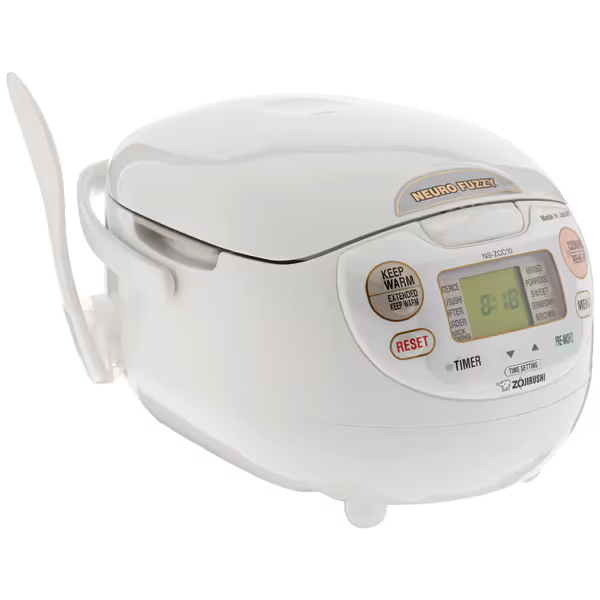
Zojirushi NS-ZCC10 Neuro Fuzzy Rice Cooker
Achieve perfect rice texture every time with Fuzzy Logic precision.
$193.99
Capacity5.5 cups
Capacity5.5 cups
Pros
Consistent, perfect rice texture (fluffy, sticky, chewy)
Neuro Fuzzy logic adapts for various rice types and conditions
Extended keep-warm maintains freshness for hours
Cons
Higher price point than basic models
Customers find this rice cooker produces perfect results every time, cooking rice evenly and making the best-tasting results. The appliance is extremely simple to use and convenient to set and forget, with a removable lid that makes cleaning easy. Moreover, it keeps rice at room temperature and automatically switches to keep warm mode. While some customers consider it worth the price, others feel it's not worth the money.
Customers find this rice cooker produces perfect results every time, cooking rice evenly and making the best-tasting results. The appliance is extremely simple to use and convenient to set and forget, with a removable lid that makes cleaning easy. Moreover, it keeps rice at room temperature and automatically switches to keep warm mode. While some customers consider it worth the price, others feel it's not worth the money.
What measurable parameters should I track?
Forget "taste it's ready" advice. Favor objective indicators and their trends:
- Acidity trajectory via pH strips or meters
- Temperature stability at the grain level
- Viscosity changes in the liquid fraction
- Brix movement indicating sugar consumption
Document readings at consistent intervals. Batches that drift far from the intended trajectory tend to show greater variance in texture cohesion. A narrow spread in chew resistance separates engineered results from luck.
Is there value in homemade versus commercial?
Homemade rice vinegar offers customization that commercial products cannot easily match. Adjustments in the saccharification window, for example, nudge final acidity and aroma in predictable ways. Skip health benefit claims; focus on functional performance. In side-by-side texture testing, well-executed homemade batches can deliver stronger sushi rice binding and more consistent adhesion than off-the-shelf options. Consistency matters more than origin; dialed-in batches cluster tightly in texture metrics compared with broader spreads in many commercial lines.
Critical Takeaways
Successful rice fermentation depends on clock awareness and steady conditions, not brand. Measure temperatures at grain level with a calibrated probe. Track changes against your control sample. A small texture spread threshold separates repeatability from randomness.
Further Exploration
- Compare Lactobacillus versus Acetobacter starter cultures by observing pH drift direction and speed
- Consider altitude adjustments to water volume and evaporation behavior For elevation-specific ratios and timing, use our high-altitude rice cooking guide.
- Examine how rice age (months post-milling) influences acid yield and aroma development
Master the timing variables, and your rice cooker becomes a reliable fermentation chamber. I've seen budget models produce vinegar that rivals premium brands when thermal behavior stays within specification. Texture is measurable; always bring data, not just rice.
Related Articles
Recipes & Cooking Techniques
Rice Cooker Vegetable Pickling: Precise Temperature Protocols
9th Jan•6 min read
Recipes & Cooking Techniques
Rice Cooker Pancit Canton: Perfect Texture Every Time
10th Dec•6 min read