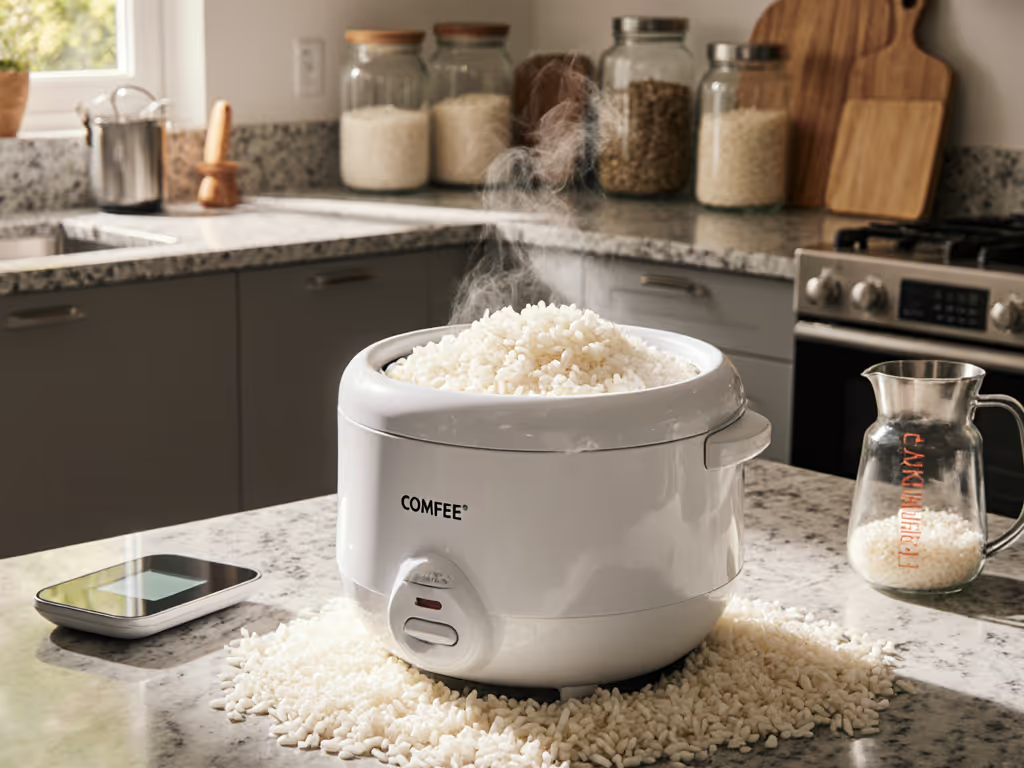
COMFEE 6-Cup Rice Cooker Review: A Good Rice Cooker For Dorms
By Kenjiro Sato • 21st May
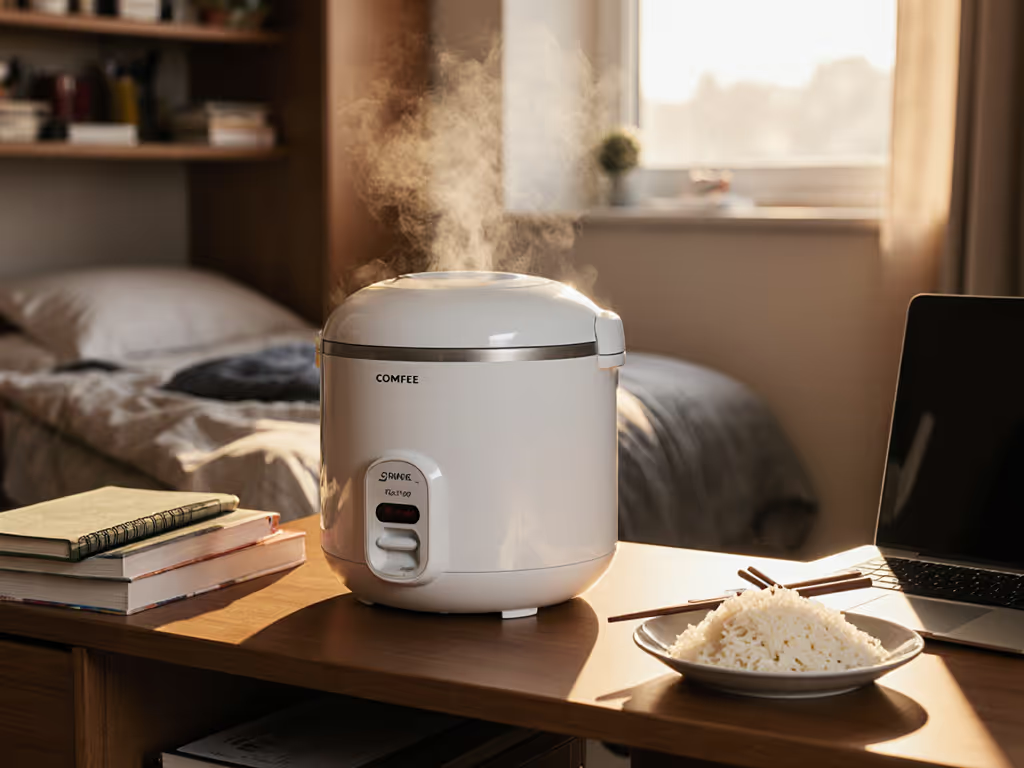
If you are choosing between a COMFEE 6-cup digital cooker and a Zojirushi 6 cup rice cooker and just want a good rice cooker that fits a dorm, the key question is not brand name, but whether the machine can hit the textures you cook most often, reliably, in 1-3 cup batches.
My focus here is simple: in this COMFEE MR-C20E10-PSS test, does the COMFEE 6-cup class cooker deliver repeatable texture, fast enough, in a cramped dorm environment, and how does it stack up against more premium micom Zojirushi models and a bare-bones mini rice cooker?
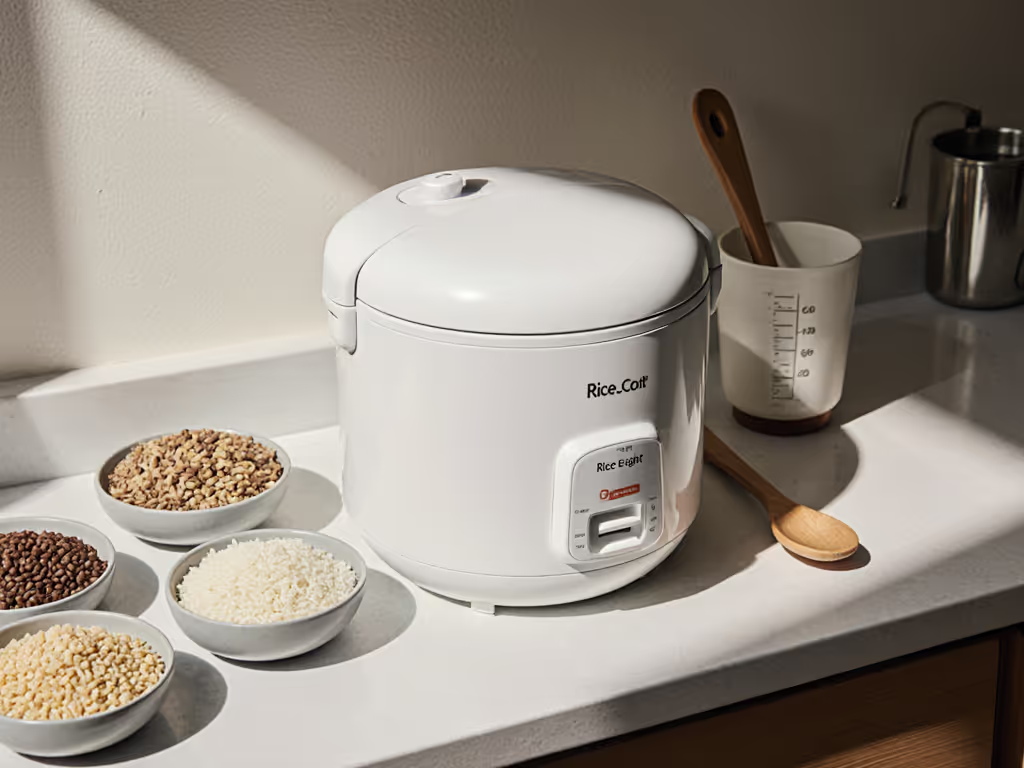
Texture is a measurement, not a mood - let's prove it.
Quick Take: Is the COMFEE 6-Cup a Good Dorm Rice Cooker?
Short answer: For most dorm kitchens, the COMFEE 6-cup (12-cup cooked) digital rice cooker is a good rice cooker: compact, inexpensive, and capable of solid white and brown rice across 1-4 cups, with bonus slow-cook and steam functions.[6][1] It does not match the fine-grain texture control or long hold quality of a mid-tier Zojirushi micom, but costs a fraction of the price and is easier to justify in a shared space. For more value options, see our best rice cookers under $50 roundup.
Buy the COMFEE 6-cup if:
- You mostly cook 1-3 cups of white or jasmine rice.
- You want one affordable dorm appliance that can also slow-cook, steam, or make oatmeal.[1][6]
- You care more about convenience and footprint than chasing perfect sushi-grade short-grain.
Skip it for a Zojirushi 6 cup rice cooker if:
- You cook rice daily and are picky about Japanese short-grain chew or very dry, separate basmati.
- You often hold rice 6-12 hours on keep-warm and want minimal texture drift.
- Your budget and space can handle a larger, heavier, pricier micom or IH unit.
I think in terms of a "repeatable texture window," a delta, not in terms of brand names. The rest of this guide breaks down how this COMFEE behaves, FAQ by FAQ, so you can judge whether its texture window matches your dorm life.
FAQ 1 - What Exactly Is the COMFEE 6-Cup Model?
Q: Which COMFEE are we talking about, and what does "6-cup" mean?
The focus here is COMFEE's 12-cup cooked / 6-cup uncooked digital rice cooker, a compact multi-cooker marketed as a portable, nonstick unit with programmable modes.[6] In typical rice-cooker terms, the "6 cup" rating refers to about six rice-cooker cups of raw rice (roughly 150-180 ml each), yielding about 12 cups of cooked rice - enough for 3-5 hungry students.
From manufacturer and retailer data plus closely related COMFEE compact reviews, this class of cooker typically offers:[6][1][3]
- Capacity: 6 cups uncooked (≈12 cups cooked) white rice.[6]
- Multi-function programs: Modes for white rice, brown rice, and often options like quinoa, oatmeal, steaming, and slow-cook.[1][3]
- Interface: Simple digital panel with one-touch program buttons and indicator lights or an LED display.[1][6]
- Auto keep-warm: Switches to warm when cooking is done, holding temperature without user input.[6]
- Delay timer: Letting you set rice to be ready later, handy when you're on campus for classes.[4][6]
- Nonstick inner pot & steamer: A removable nonstick bowl and a plastic steam basket for vegetables or dumplings.[6][3]
A smaller sibling in the same family, a 2-quart COMFEE compact cooker, holds about 8 cups cooked / 4 cups uncooked and provides six one-touch programs for white rice, brown rice, quinoa, oatmeal, steaming, and slow-cooking.[1] Functionally, the 6-cup MR-C20E10-PSS sits one step up in capacity while following the same control logic and program design.[6][1]
So in dorm terms: you are getting a rice cooker first, but one that also moonlights as a very simple slow cooker and steamer.
FAQ 2 - How Big Is It Really, and Will It Fit in a Dorm Room?
Q: Is the COMFEE 6-cup too big for a dorm desk or micro-kitchen?
The COMFEE 6-cup digital model occupies roughly the same footprint as other small multi-cookers and is explicitly marketed as portable and counter-friendly.[6] A smaller COMFEE rice cooker with a 4-cup uncooked capacity is described as "compact" by independent reviewers, with a diameter of about 6-7 inches and a shorter profile than older, bulkier cookers.[4] Expect the 6-cup digital to be slightly larger but still firmly in the small-appliance category.
Compare that with many Zojirushi 5.5-6 cup micom units, which are squat but wide and deeper front-to-back. A Zojirushi will usually take more shelf depth and be noticeably heavier due to a thicker inner pot and damped lid mechanisms. In a tight dorm where counter space is shared with an electric kettle and maybe a hot plate, the COMFEE's lighter shell and smaller footprint are an advantage.
In practical terms:
- Storing it on top of a mini-fridge or a narrow cart is realistic.
- It is light enough to move between closet and desk.
- Steam vents on COMFEE models are straightforward top vents; you just need 15-20 cm of clearance above so it doesn't blow condensate onto a shelf.[1][4]
If your dorm has strict appliance rules, the COMFEE's marketing as a mini rice cooker / multi-cooker often sits in the same category as small slow cookers and should pass more easily than large open-hotplate devices, but always confirm with housing. For even smaller footprints, compare our mini rice cooker guide for dorms and RVs.
FAQ 3 - How Does the COMFEE 6-Cup Cook White Rice (Jasmine, Short-Grain, Basmati)?
Q: What does white rice from this cooker actually feel like to bite?
Digital COMFEE units follow a standard microcontroller curve: aggressive heating to boil, then modulated power as temperature hovers near 100 °C while moisture gets absorbed, followed by a short rest and a switch to keep-warm.[1][3] A smaller COMFEE multi-cooker tested on YouTube finished a 4-cup white rice batch in about 32 minutes, compared with 17-18 minutes for a simple lever-type cooker using the same rice and water.[4] That longer cycle is typical for digital cookers that aim for more even gelatinization instead of just boiling until the thermostat trips.
From that behavior and broader user feedback on COMFEE's digital line, you can expect:
-
Jasmine / standard long-grain:
-
On the white-rice program, the machine tends to produce fluffy, slightly moist grains with good separation once fluffed, but not as dry as a tuned basmati cooker.
-
For fried-rice prep, a 5-10% water reduction and a short uncovered rest after cooking helps drive off surface moisture.
-
Japanese-style short-grain (table rice):
-
The COMFEE can hit a pleasant everyday stickiness but will not match the fine-shaded chew, gloss, and evenness of a good Zojirushi micom tuned for Koshihikari.
-
For sushi or onigiri, rinsing thoroughly and using a lower fill (1-2 cups instead of maxed-out 4-5 cups) improves consistency at the edges.
-
Basmati:
-
Using the default white-rice program, basmati will lean slightly toward softer than restaurant-style dry and separate.
-
To push it drier, use a modest water cut and let the rice sit on keep-warm with the lid cracked for 5-10 minutes after completion.
The important part for a dorm is not absolutes, but repeatability. Once you tune your water ratios by grain and brand, ideally by weight, you can reliably stay inside a narrow, predictable chew range. That is the repeatable texture window you actually cook in.
FAQ 4 - How Does It Handle Brown Rice, Mixed Grains, and Oatmeal?
Q: Is the COMFEE 6-cup only for white rice, or can it handle brown and multi-grain dorm experiments?
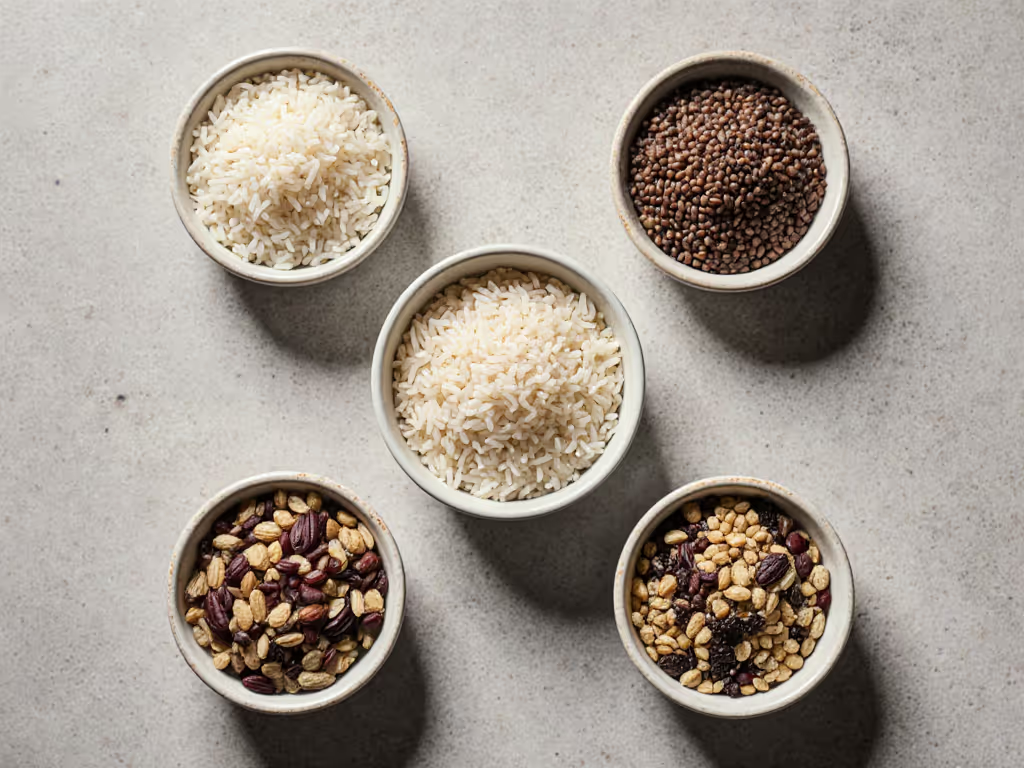
COMFEE's compact digital models include dedicated programs for brown rice, quinoa, oatmeal, steaming, and slow-cooking.[1] The 6-cup MR-C20E10-PSS follows the same design brief and is marketed as suitable for soups, stews, and grains in addition to rice.[6] That matters if your dorm diet isn't just white rice plus instant noodles.
Based on program design and user recipes shared for similar COMFEE all-in-one cookers:[1][5]
-
Brown rice:
-
The brown-rice program extends the absorption and simmer phases to account for tougher bran layers, typically running longer than white rice.
-
Expect timings closer to 45-60 minutes for 1-2 rice-cooker cups.
-
Mixed white + brown or multi-grain blends:
-
Many COMFEE owners use the brown or multi-grain style program with modestly increased water and achieve fully cooked brown kernels without destroying the white component.[5]
-
For dorm cooking, this makes one-button grain bowls practical: rice + lentils, rice + barley, etc.
-
Quinoa, oatmeal, grits / polenta:
-
Reddit users report using COMFEE multi-cookers successfully for quinoa, porridge, and grits by leveraging porridge-like programs or the slow-cook function.[5]
-
This expands the unit from a rice-only device to a general-purpose grain cooker.
In a dorm context, that flexibility is more leverage than you might think: one appliance can cover oatmeal breakfast, rice lunch, and slow-cooked beans or curry for dinner, even though it is fundamentally a rice cooker.
FAQ 5 - Is It Fast Enough for Student Schedules?
Q: Will I be stuck waiting forever for rice before class?
As mentioned, a smaller COMFEE compact took about 32 minutes to cook a full 4-cup white rice batch, roughly twice as long as a basic on/off cooker that finished in 17-18 minutes.[4] Multi-function COMFEE cookers with digital programs and slow-cook features share similar timing characteristics.[1][3]
What that means in practice:
- 1-2 cups white rice: Roughly 25-30 minutes from start to finish.
- Fuller loads (4-6 cups uncooked): Approaching or slightly exceeding the 30-35 minute mark.
- Brown rice / mixed grains: Often 45-60 minutes depending on mode and batch size.
For a dorm schedule, that is acceptable if you plan a 30-minute buffer before meals, and especially if you use the delay timer so the rice finishes just as you return from class.[4][6] It is not instant, but it is predictable.
Compared with a Zojirushi micom or IH unit:
- Standard cycles are often in the same 35-50 minute range for white rice.
- Some Zojirushi models have quick-cook or umami-enhancing modes that change timing, but they are not radically faster; they simply manage heat and rest phases more intelligently.
So speed is not the main differentiator. Texture control, keep-warm stability, and build quality are where Zojirushi pulls away, not raw minutes.
FAQ 6 - How Does It Compare to a Zojirushi 6 Cup Rice Cooker on Texture?
Q: If I spend more on Zojirushi, what texture delta do I actually get?
Zojirushi's mid-range 5.5-6 cup micom cookers use more complex heating algorithms and, on some models, multiple sensor inputs to adjust power based on rice type, volume, and even ambient temperature. Their strengths:
- Short-grain Japanese rice: noticeably more even softness from center to surface, with better gloss and bounce.
- Basmati / long-grain: modes or manual tuning that can keep grains distinct, drier, and less clumped.
- Keep-warm: the ability to hold rice for 8-12 hours with slower texture degradation, less drying, and reduced yellowing.
A COMFEE 6-cup digital cooker, by contrast:[1][3][6]
- Uses a simpler control scheme with fewer rice-specific profiles.
- Has auto keep-warm but generally without advanced reheat cycles or extended umami holds.
- Trades ultra-fine texture tuning for versatility (slow cook, porridge, steam) and price.
From a pure texture-engineering standpoint, Zojirushi wins on tightness of the texture band it can hit and hold, especially for Japanese short-grain and more demanding basmati cooks. But the price delta is large, often 3-4x.
For dorm life, that trade-off only makes sense if:
- Rice is central to your daily cooking, and you notice small chew differences.
- You routinely serve guests or cook heritage dishes where rice texture is a core signal of care.
If you primarily batch-cook rice to eat with curries, stir-fries, or stews, the COMFEE gets you close enough that the remaining texture delta is smaller than the lifestyle delta in cost and size.
FAQ 7 - How Does It Compare to a Truly Tiny Mini Rice Cooker?
Q: Would a 3-cup mini rice cooker be better for a single student?
COMFEE also sells a more basic 6-cup cooked / 3-cup uncooked one-touch rice cooker with a removable nonstick bowl, marketed for soups, stews, grains, and oatmeal.[7] It operates more like old-school cookers: you add rice and water, press a single button, and it switches to warm when done.[7]
Relative to that mini rice cooker style unit, the 6-cup digital multi-cooker offers:[6][1][7]
-
Pros vs mini:
-
More programs (brown rice, oatmeal, slow-cook, steam).[1][6]
-
A clearer display and usually a delay timer, which the simplest one-touch models lack.[4][7]
-
Better control over non-rice tasks (beans, soups, stews), acting as a general dorm pot.
-
Cons vs mini:
-
Slightly larger footprint and higher weight.
-
More complex interface, there is more to explain to roommates.
-
Longer cook cycles than the very simplest on/off designs.[4]
If your dorm cooking is mostly 1 cup at a time and always white rice, a 3-cup mini cooker is easier to live with and slightly faster. See our top budget mini rice cookers for dorm life for the simplest one-button options. If you want one pot to cover rice, oats, soups, and basic slow-cooked meals, the 6-cup COMFEE multi-cooker earns its extra buttons.
FAQ 8 - How Good Is the Keep-Warm for Dorm Use?
Q: Can I safely leave rice in the COMFEE while I'm in class or at the library?
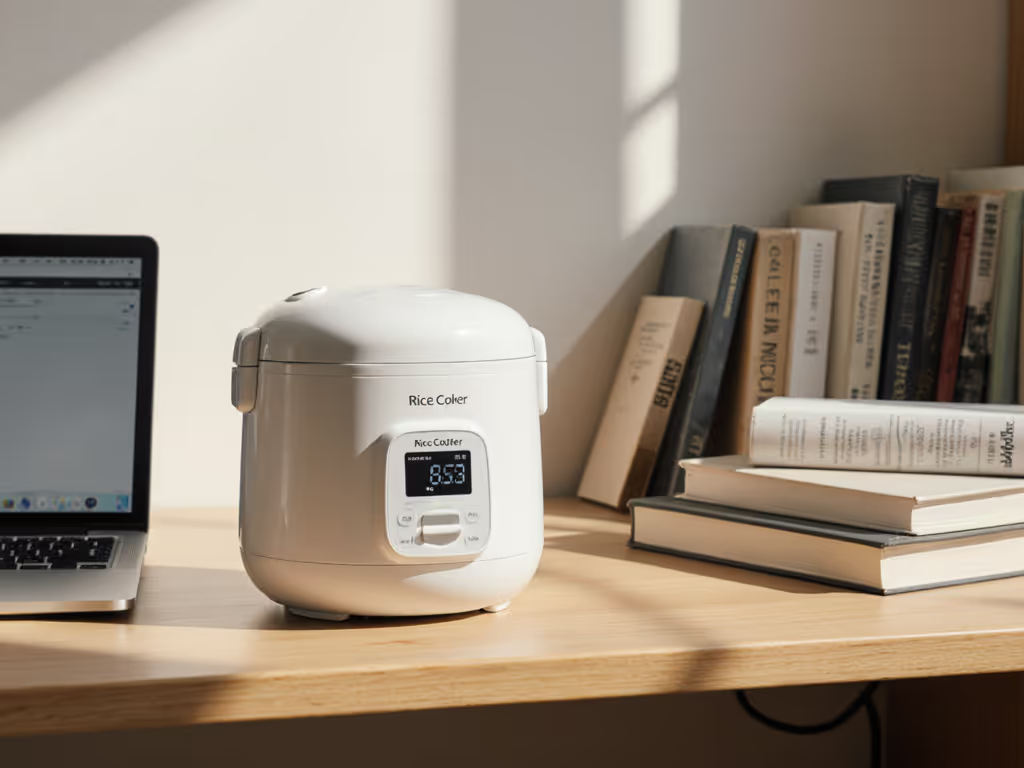
The COMFEE 6-cup digital rice cooker includes an automatic keep-warm function that kicks in when the cooking cycle ends.[6] Simpler COMFEE mini cookers also offer a warm function, though without detailed control.[7]
In real-world use for standard white rice:
- Expect 2-4 hours of good quality on warm where texture and aroma are still close to fresh.
- Beyond that, rice gradually dries at the edges and may begin to yellow or pick up slight off-flavors, especially if the lid is opened and closed repeatedly.
Zojirushi micom cookers are engineered explicitly around long, gentle keep-warm phases, often including reheat functions and multi-hour extended warm modes that better maintain moisture and minimize staling. This is one of the clearest functional divides between budget digital cookers and premium models.
For dorm life, a simple rule-of-thumb works:
- Under 4 hours: COMFEE warm is fine for most white rice.
- 4-8 hours: acceptable but expect drier edges, best used for fried-rice prep.
- Overnight: transfer to containers and refrigerate instead of relying on warm.
If you often cook once and eat all day, Zojirushi's keep-warm capability earns its cost. If you cook once or twice per day and eat within a few hours, COMFEE's warm function is adequate.
FAQ 9 - How Easy Is It to Clean and Maintain in a Shared Dorm Kitchen?
Q: Will roommates actually clean this thing, or will it become a starch fossil?
The COMFEE 6-cup digital cooker uses a removable nonstick inner pot and typically ships with a plastic rice spatula and steam tray.[6][3] A basic 6-cup cooked COMFEE also has a removable nonstick bowl.[7]
Cleaning workflow:
- Inner pot lifts out and can be washed in the sink with mild detergent; nonstick surfaces mean most rice releases easily if soaked briefly.
- The steam vent and lid area should be wiped down after starchy cooks (oatmeal, porridge, over-filled rice), but the design is simpler than some high-end cookers with complex steam caps.[1][4]
- External housing is smooth plastic or stainless-like shell, easy to wipe.
By contrast, many Zojirushi models include a removable inner lid and more intricate steam cap designs. These improve condensation handling and texture but do add parts to clean.
For a dorm where dishes pile up, the COMFEE's low-part-count is an advantage. To keep performance and flavor consistent, follow our rice cooker descaling guide. The main maintenance discipline is preventing roommates from scratching the nonstick with metal spoons and from leaving rice in the pot on warm for days.
FAQ 10 - Measurement, Batch Size, and Fried-Rice Readiness
Q: How do I get consistent results for 1-2 cup batches, and can I plan for fried rice?
COMFEE cookers ship with a small rice-measure cup; their internal water lines are calibrated to that cup and not to standard US cups.[4][7] A common user error is mixing metric cups, US cups, and rice-cooker cups.
To get repeatable results: Use our rice cooker water ratios reference to calibrate by grain.
-
Standardize on grams:
-
Pick a baseline, e.g., 180 g of raw white rice as "1 cup" in your notes.
-
Log water ratios by weight (e.g., 180 g rice to 200-210 g water for jasmine; adjust for brand and age).
-
Respect minimum volume:
-
Like most small cookers, COMFEE units perform best above a certain minimum load. Running at least 1 rice-cooker cup (roughly 150-180 ml) helps the thermostat behave consistently.
-
For fried rice:
-
Reduce water by 5-10% from your normal table-rice setting.
-
After cooking, open the lid, fluff thoroughly, and spread rice in a wide container to cool before refrigerating.
-
Use within 24 hours for maximum bounce in the pan.
Working this way, you transform the COMFEE from a guess-and-hope pot into a small, predictable grain instrument. Exactly the moment I realized, years ago during a week of logging boil-to-simmer transitions in Osaka, that rice texture at home could be engineered instead of wished for.
Final Verdict - Should You Buy the COMFEE 6-Cup for Your Dorm?
Where the COMFEE 6-Cup Excels
- Dorm-appropriate footprint and weight: Small, portable, easy to move and store.[6][4]
- Multi-function value: Handles white and brown rice, grains, oatmeal, steaming, and slow-cooking in one affordable dorm appliance.[1][5][6]
- Simple cleaning and maintenance: Few parts, removable nonstick pot, straightforward venting.[6][7]
- Predictable, if not elite, texture: Once you calibrate water and batch sizes, it hits a stable, repeatable texture band for everyday eating.
Where Zojirushi Still Leads
- Short-grain precision: Tighter texture control for Japanese rice and sushi applications.
- Basmati dryness and separation: Better options for very distinct long grains.
- Keep-warm performance: Longer, more stable holding without dryness or off-flavors.
- Build and longevity: Thicker pots, refined lids, and long-term reliability.
Who Should Choose What?
-
Choose COMFEE 6-Cup if:
-
You're in a dorm or small apartment.
-
Rice is important but not the only thing you cook.
-
Budget and space are tight, and you want a versatile good rice cooker that can also act as a small slow cooker and steamer.
-
Choose a Zojirushi 6 cup rice cooker if:
-
Rice texture is central to your cooking identity and hospitality.
-
You cook rice daily across multiple grains and care about the fine texture "delta" between just-okay and excellent.
-
You want best-in-class keep-warm and don't mind a higher price and slightly larger footprint.
-
Choose a tiny mini rice cooker if:
-
You cook almost exclusively 1-cup batches.
-
You want a dead-simple, one-button device and rarely cook brown rice or mixed grains.[7]
If you are honest about your current dorm reality, limited space, variable roommates, and mixed cooking needs, the COMFEE 6-cup digital cooker hits a very practical sweet spot. It gives you a controllable, repeatable texture window for the grains you actually cook, without demanding a premium-budget commitment. Once you map your own water ratios, you can live inside that narrow, predictable window meal after meal, and that, more than the logo on the lid, is what makes a rice cooker truly good.
Related Articles
Hands-On Product Reviews
Aroma ARC-1000SB Review: 10-Cup Rice Cooker for Family Meals
4th Apr•13 min read