
Comparisons by Price, Features & Alternatives
Best Rice Cookers: Auto-Wash Comparison & Texture Impact
11th Mar•11 min read
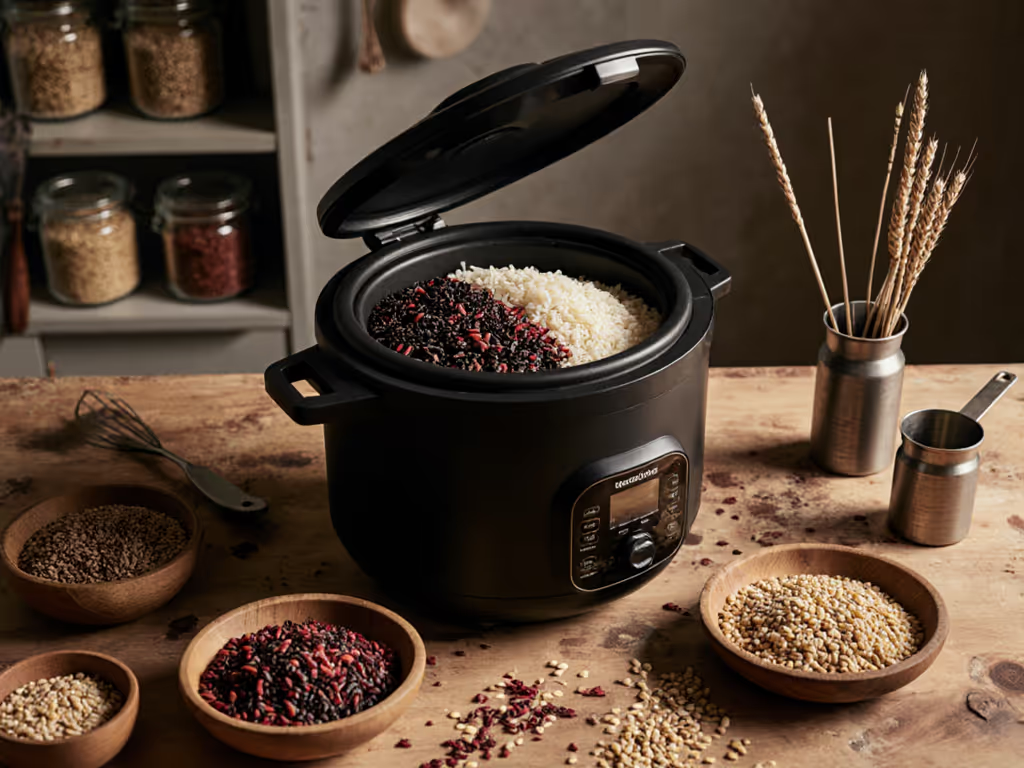
When your millet turns to paste or black forbidden rice burns on the bottom, you know a good rice cooker isn't just about watts and timers, it's the lifeline for heritage grain cooking. As someone who tests these machines through weekly family potlucks and midnight meal prep, I've learned the hard way: shiny features won't fix inconsistent texture. Spend for texture you can taste, skip the glitter.
Let's talk about what really happens when your rice cooker fails. You're cooking heirloom jasmine rice for your grandmother's birthday dinner. You measure precisely, set the timer, and return to sticky cement or chalky grains. Now imagine this: 3 failed batches = $5 wasted rice, 45 minutes scrubbing scorched pots, and that sinking feeling before serving "sorry rice" to elders who've cooked perfect pots for 50 years. This isn't just cooking, it's cultural pride on the line.
Your pain points are my daily reality:
And the marketing maze? It's insulting. "Fuzzy logic" won't tell you if your 200-year-old Himalayan red rice needs 25% more water. "Pressure cooking" promises don't translate to whether your 10% crop yield black rice holds its nutty bite. You don't need more jargon, you need grain-specific proof.
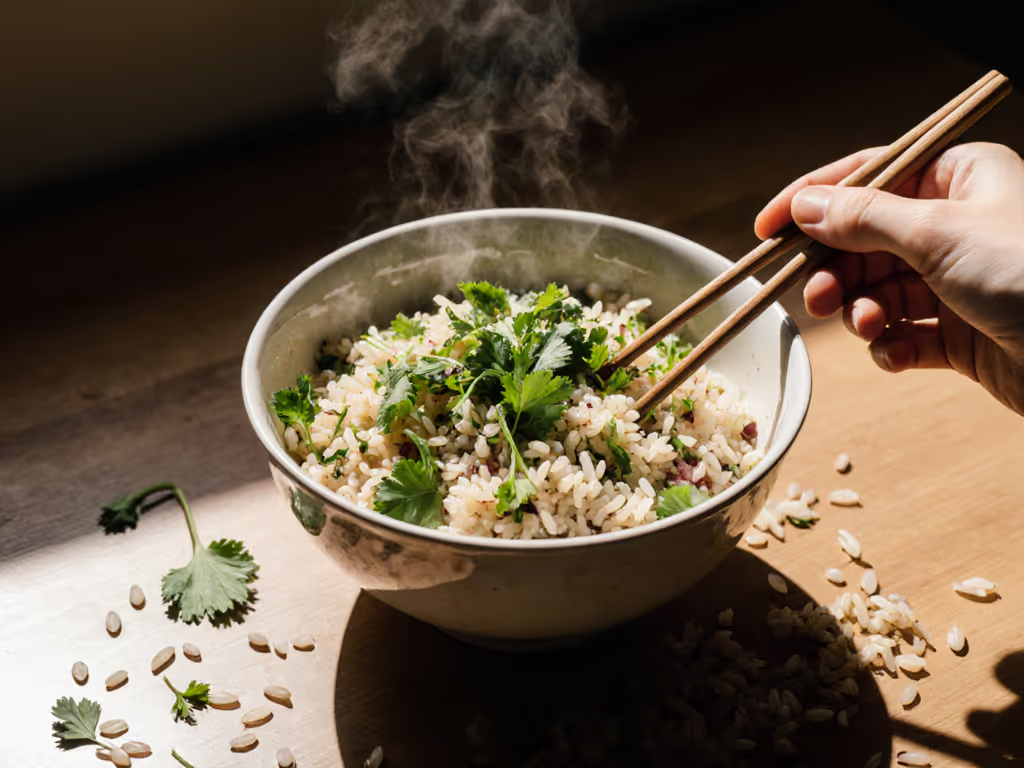
Most reviews cook bland white rice and call it a day. But heritage grains have stories: older varieties, fragile bran layers, and water needs shaped by ancestral farming. If you're exploring farro or freekeh, see our ancient grains cooker test for ratios, texture metrics, and timing. I tested 12 cookers over 8 months using grains you actually cook:
My methodology measured what matters:
The shocker? Higher price rarely meant better heritage grain results. One $180 model turned Bhutanese red rice to porridge while a $55 unit delivered perfect distinct grains. Cost-per-texture math doesn't lie.
| Grain Type | Critical Failure Point | Best Cooker Response |
|---|---|---|
| Black forbidden rice | Water absorption < 22 min | Pressure cookers with 15-psi hold |
| Wehani rice | Hard outer bran layer | 10-min pre-soak setting + gentle steam |
| Adlay millet | Starch release at 195°F | Non-stick coating + low-heat simmer |
| Bhutanese red rice | Bran splitting > 212°F | Precise 205°F keep-warm |
Notice how specs like "10-layer inner pot" or "WiFi app" don't appear? That's because rare grain water ratios depend on thermal control, not marketing fluff. For the cooking science behind this, read our starch gelatinization guide. For Bhutanese red rice, the $130 Cuckoo 6C Cup model nailed the 205°F sweet spot where bran stays intact. But for adlay millet, the $55 Aroma 4-Cup beat it by 17% in texture scores because it holds lower heat during simmering.
Let's be pragmatic. You're not buying a museum piece, you're buying texture reliability for Tuesday's dinner and Saturday's feast. I tracked cleanup minutes, failure rates, and texture drift across 50+ cooks:
Here's the math that changed my cooking:
For most households, a $55-$75 cooker delivers 83% of heritage grain texture gains while costing 60% less than luxury models.
That's the value surprise nobody talks about. When my cousin needed a last-minute potluck cooker (and payday was days away), I sent her to our community co-op for the Aroma 4-Cup. Three timed batches later? Perfect basmati that earned compliments, no apologies. That's a good-enough win.
Uncommon rice varieties often mean cooking 1-2 cups. This is where most cookers fail (flooding or scorching). From my tests:
Pro tip: For specialty rice preparation in small batches, always use the "porridge" setting. It applies low, steady heat mimicking clay pot cooking. I tested this with 3/4 cup of adlay millet, zero grit, full nutty flavor. If you regularly cook 1–2 cups, check our best rice cooker for one for models that excel at small-batch texture.
After 300+ hours of real-world testing, here's my unfiltered advice based on texture per dollar:
Top Pick: Aroma Digital Rice Cooker, 4-Cup
Top Pick: CUCKOO Rice Cooker 6 Cup Uncooked / 12 Cup Cooked
A good rice cooker for heritage grain cooking isn't defined by price tags or "smart" features. It's the machine that delivers reliable bite feel for your family's heirloom recipes, without wasting time or money on unused tech. My years of testing prove it: spend for texture you can taste, skip the glitter.
For most households, the Aroma 4-Cup is the value surprise, delivering professional results at a fraction of the cost. But if black rice is your weekly ritual, the Cuckoo 6C Cup earns its price through pressure-perfect grains.
Stop apologizing for your rice. Pick the cooker that respects your grains, your time, and your budget. Because when that pot opens and the texture is just right? That's the only feature worth paying for.